WHAT IT DOES
Demand, translated. Supply, pooled.
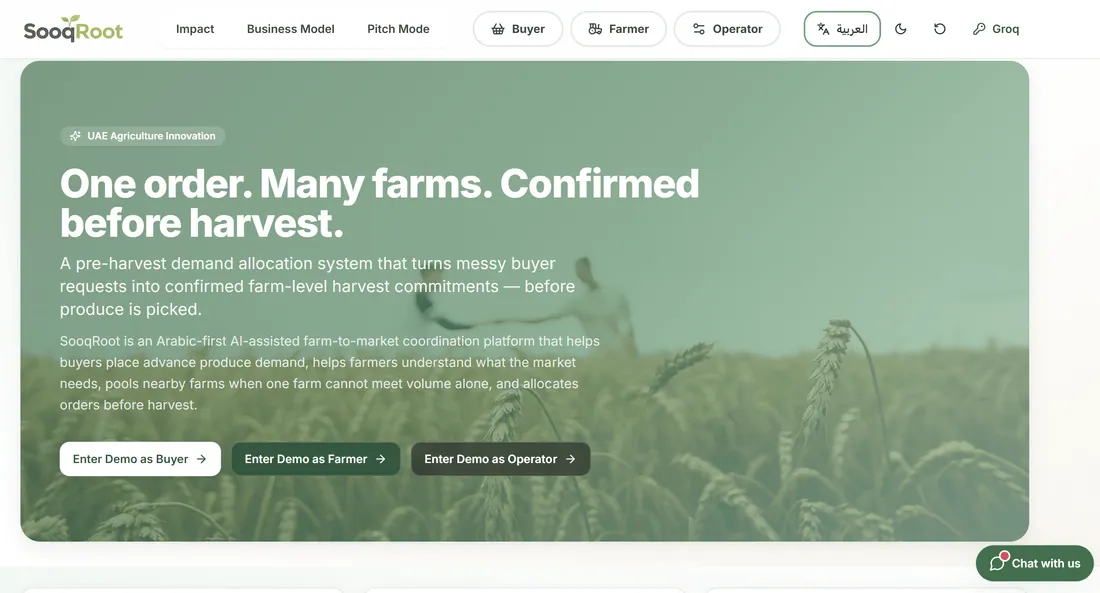
From a buyer's plain-language request to a confirmed, multi-farm harvest plan - an AI translator, a deterministic allocation engine, a risk model, and an Arabic-first copilot, working end to end.
01AI demand translator
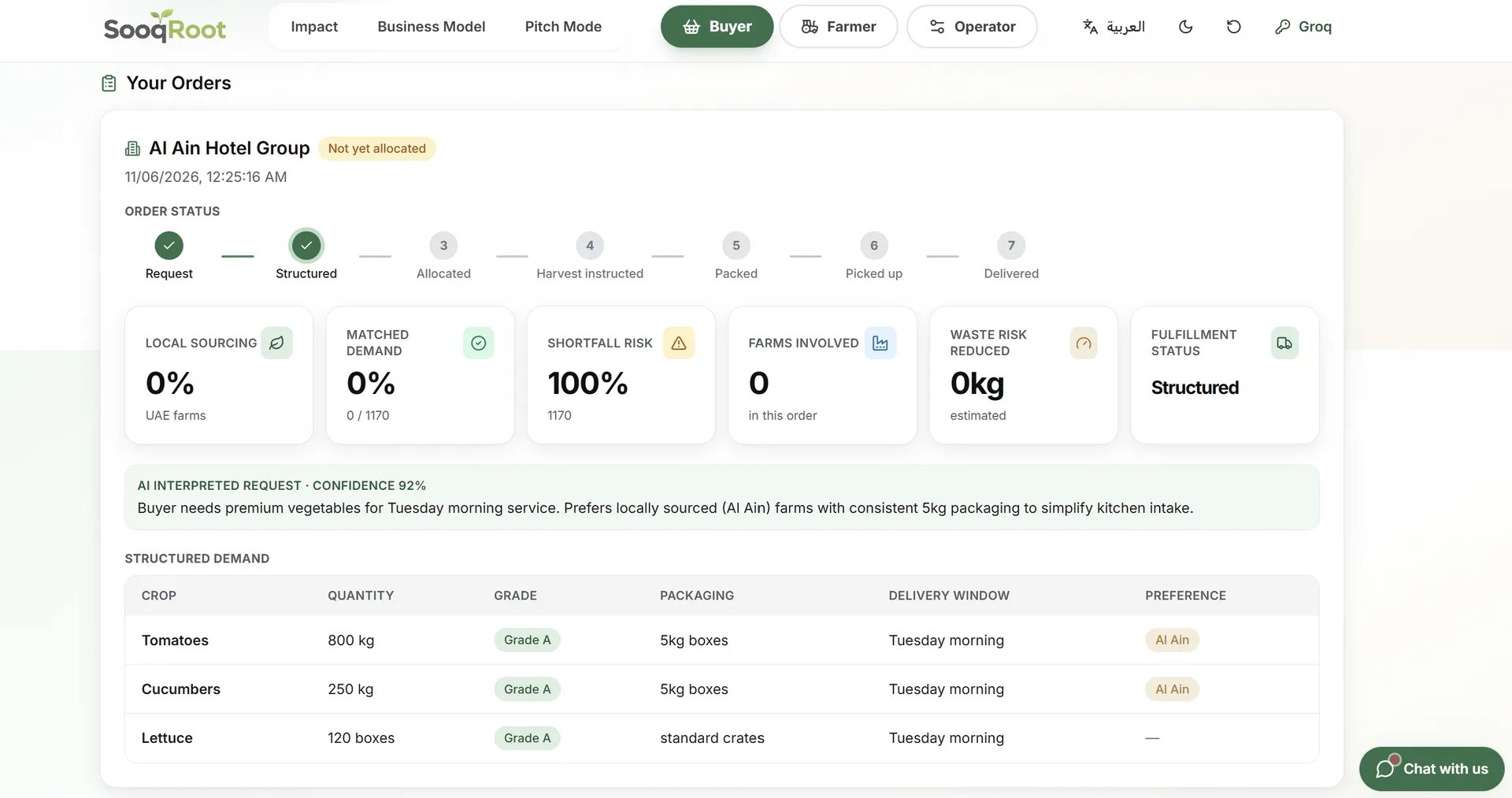
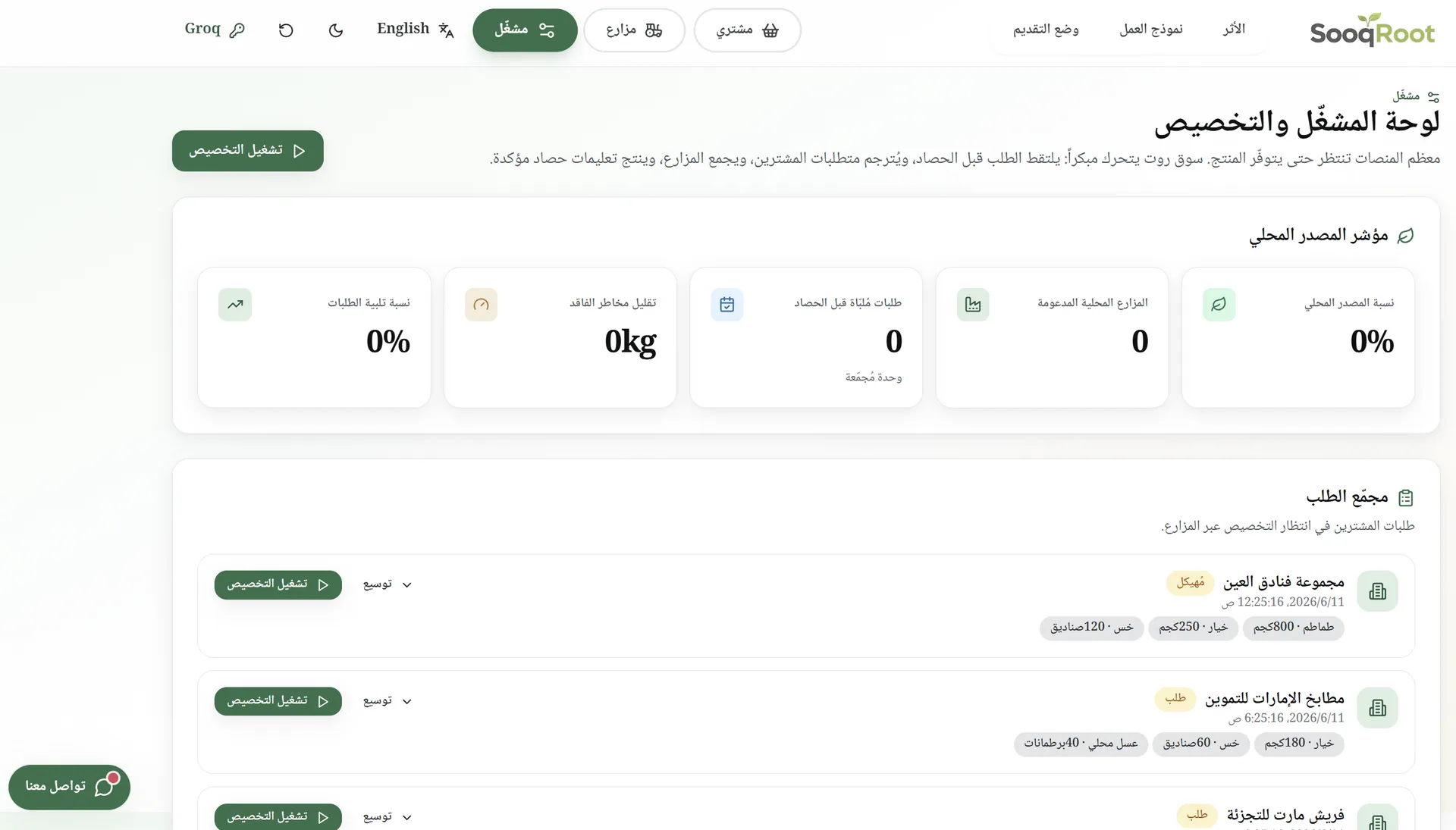
Buyers type what they need in plain language. A rule-based natural-language parser turns it into a structured demand table - crop, grade, quantity, packaging, delivery window - and returns an interpretation, a confidence score, and the reasoning behind every line.
02Rule-based allocation engine
A deterministic solver matches each order to farms by grade fit, supply confidence, location, and distance - then splits a single order across Al Akhdar, Desert Leaf, and Oasis Fresh when no farm can cover the volume alone, surfacing exact shortfalls as it goes.
03AI fulfillment risk scoring
Every allocation is scored for fulfillment risk with written reasons and concrete mitigations, backed by automatic backup-farm fallbacks and a substitute advisor that proposes alternative produce when supply runs thin.
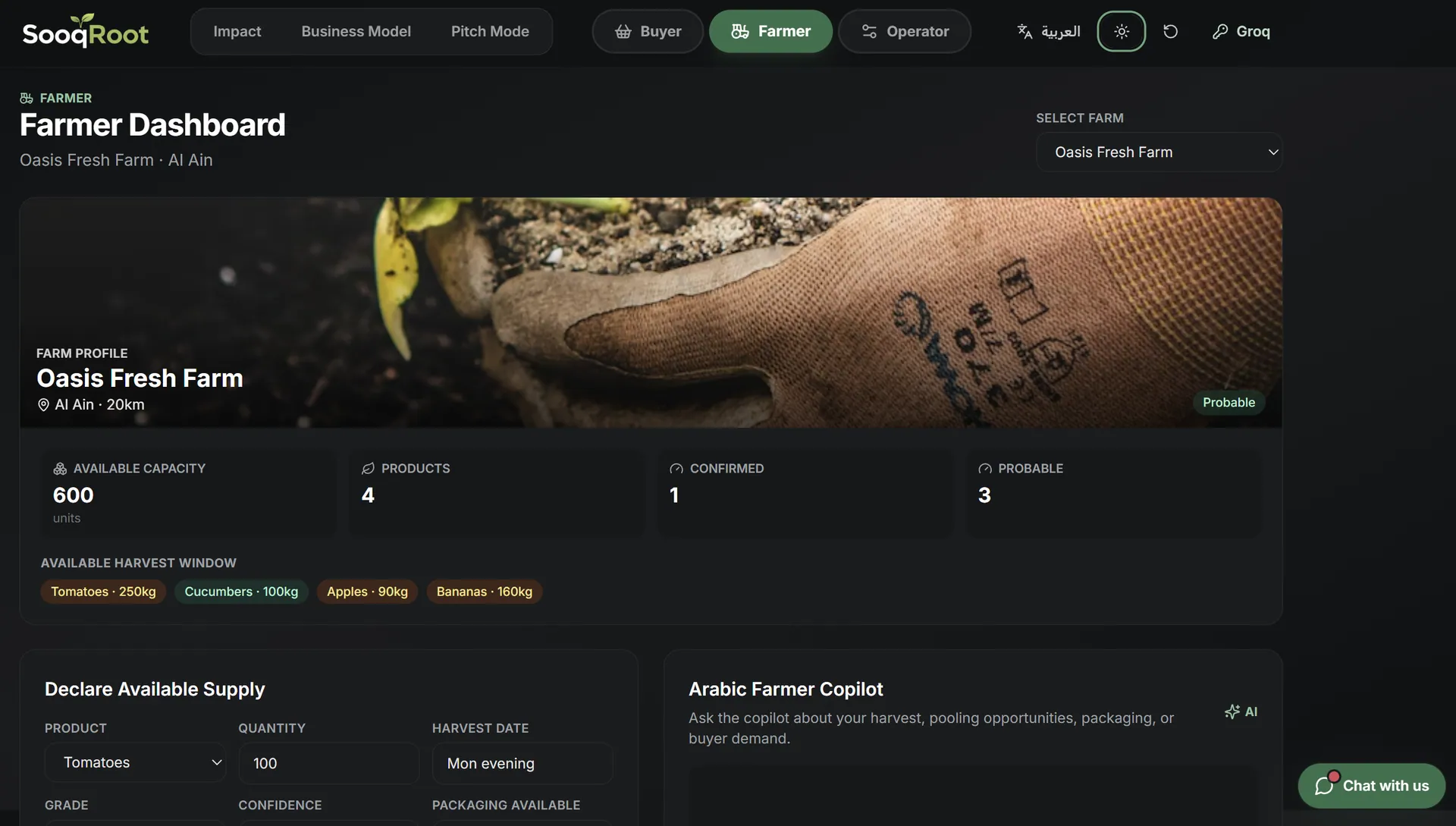
04Arabic-first farmer copilot
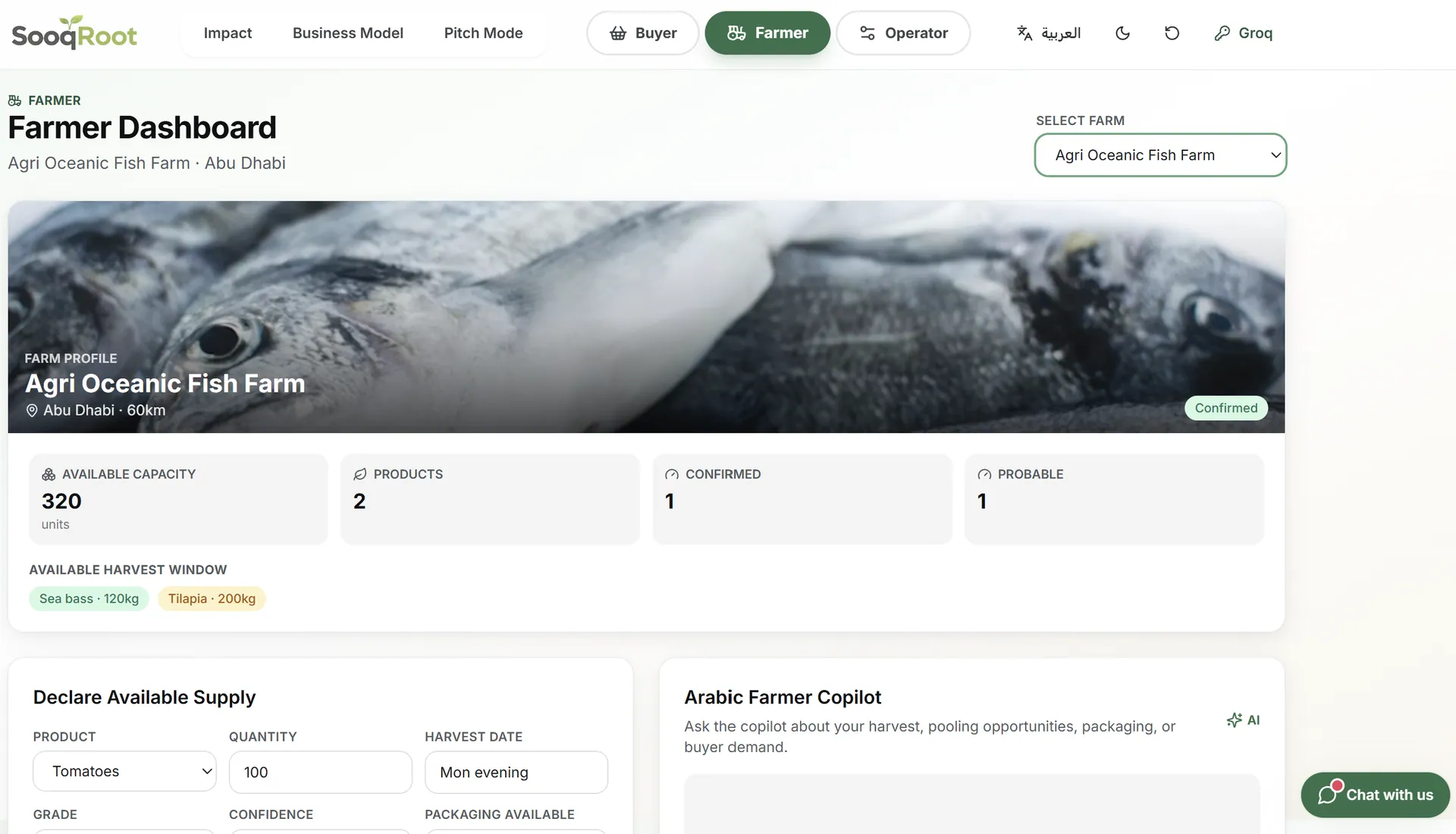
An Arabic-native copilot advises farmers on whether to join a pool, which grade and packaging to target, and when to harvest - referencing live open demand so the guidance maps to what the market is actually asking for.
05Harvest instruction cards
Once an order is allocated, each farm receives harvest-instruction cards plus a quality-and-packaging guide tailored to vegetables, fish, or honey - turning an abstract market signal into farmer-ready actions.
06Batch passport traceability
Each batch carries a QR-style passport with end-to-end traceability and a local-sourcing tracker, so every delivery can be traced from a specific farm back to the original buyer demand.