
A solar system you can fly through
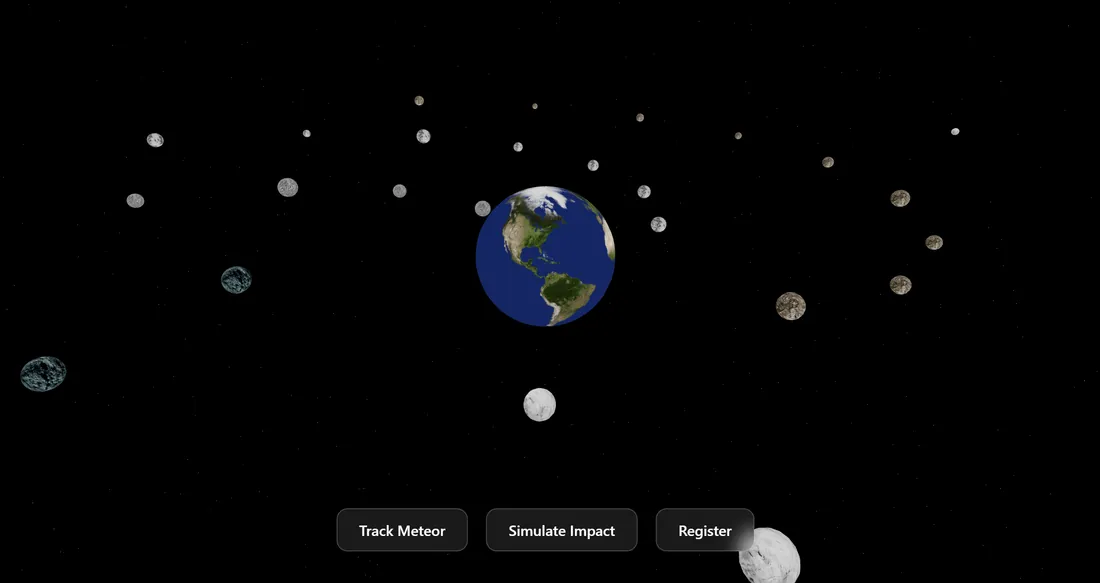
Earth and dozens of asteroids rendered as real 3D bodies in a live WebGL space scene - not a chart, a simulation. Track any meteor or jump straight into an impact run from the same view.
An interactive 3D near-Earth object platform built on live NASA asteroid data - a real-time WebGL solar view, a live NEO tracking feed with hazard flags, a physics-based impact simulator, and an emergency hazard-alert system.
Track the real asteroids passing Earth, simulate what an impact would do, and see the alerts a planetary-defense system would fire - one live, interactive 3D platform.
Earth and dozens of asteroids rendered as real 3D bodies in a live WebGL space scene - not a chart, a simulation. Track any meteor or jump straight into an impact run from the same view.
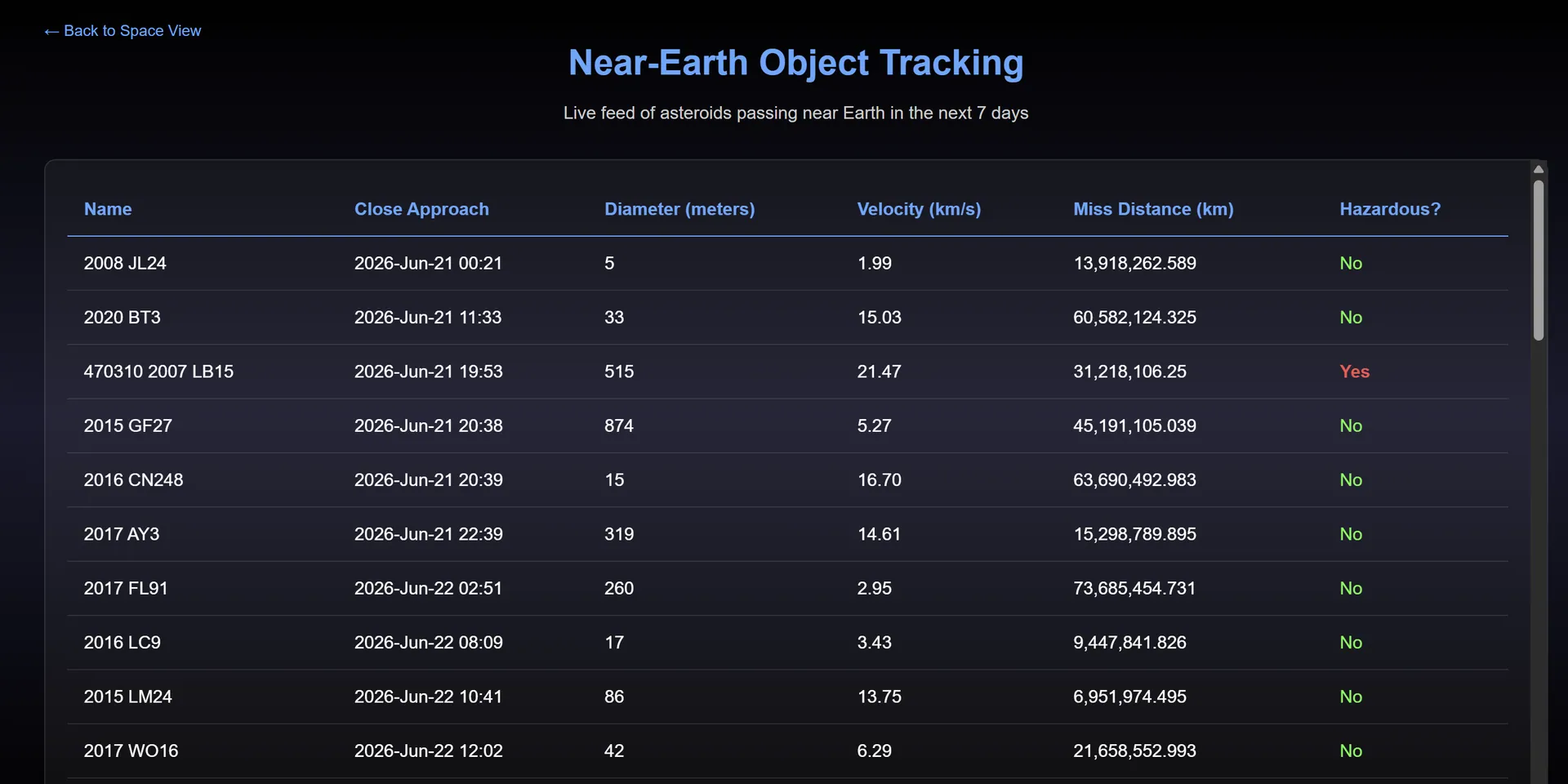
A real feed of asteroids passing Earth over the next 7 days - name, close-approach time, diameter, velocity, miss distance, and a hazard flag - straight from NASA's NEO datasets.
Dial in an asteroid's diameter and impact velocity and watch the consequences resolve in real time - impact energy in megatons of TNT and crater diameter, modelled from first principles.
A hazard-alert layer that turns raw risk into action - simulating the emergency notifications a real planetary-defense pipeline would send when a dangerous object is detected.
A live table of the asteroids passing Earth in the next 7 days - each with its close-approach time, diameter, velocity, miss distance, and whether NASA classes it as hazardous. The data is real; the urgency is earned.
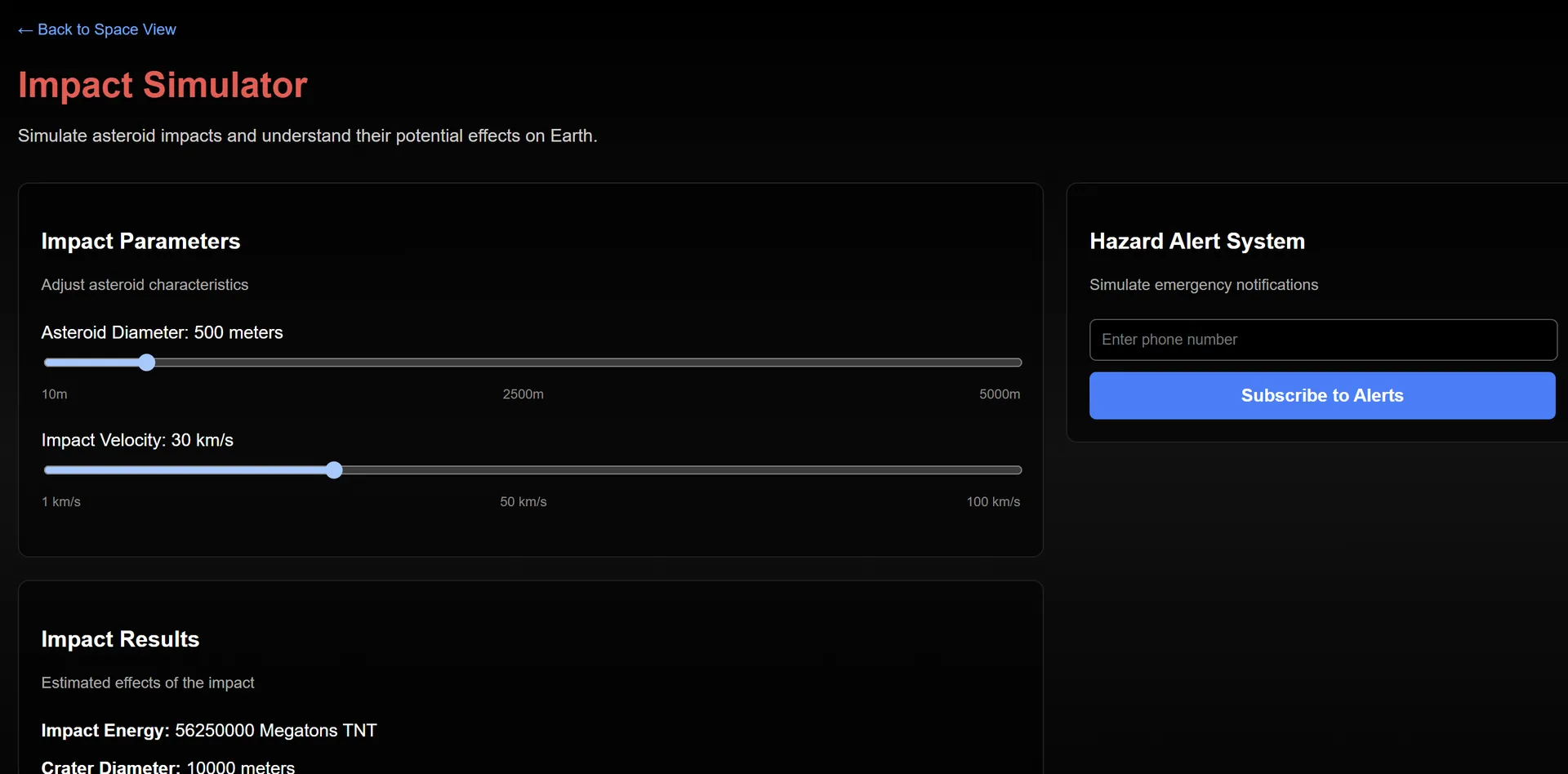
Adjust an asteroid's diameter and velocity and the simulator resolves the impact in real time - energy released in megatons of TNT and the crater it leaves - then fires the emergency alerts a real planetary defense system would send.
An interactive 3D near-Earth object platform: live NASA asteroid feeds, a physics-based impact simulator, and a hazard-alert system rendered in a real-time WebGL solar view.
Built by Team Kanban, the studio's competition and experimental build team, at NASA Space Apps Challenge, Dubai - Most Promising. A special recognition, not a placement. See the full competition record.